
Keep the system small at first: choose repeatable chores, assign simple coin values, approve the work, and offer rewards your family can actually keep.
Start with rewards your family already believes in
Rewards do not need to be expensive or complicated. Kids often respond well to rewards that are already part of family life, such as movie night, extra game time, a favorite snack, or a later bedtime.
The important part is consistency. If a reward is listed, parents should be comfortable saying yes when a child earns it.
Use coins as family points
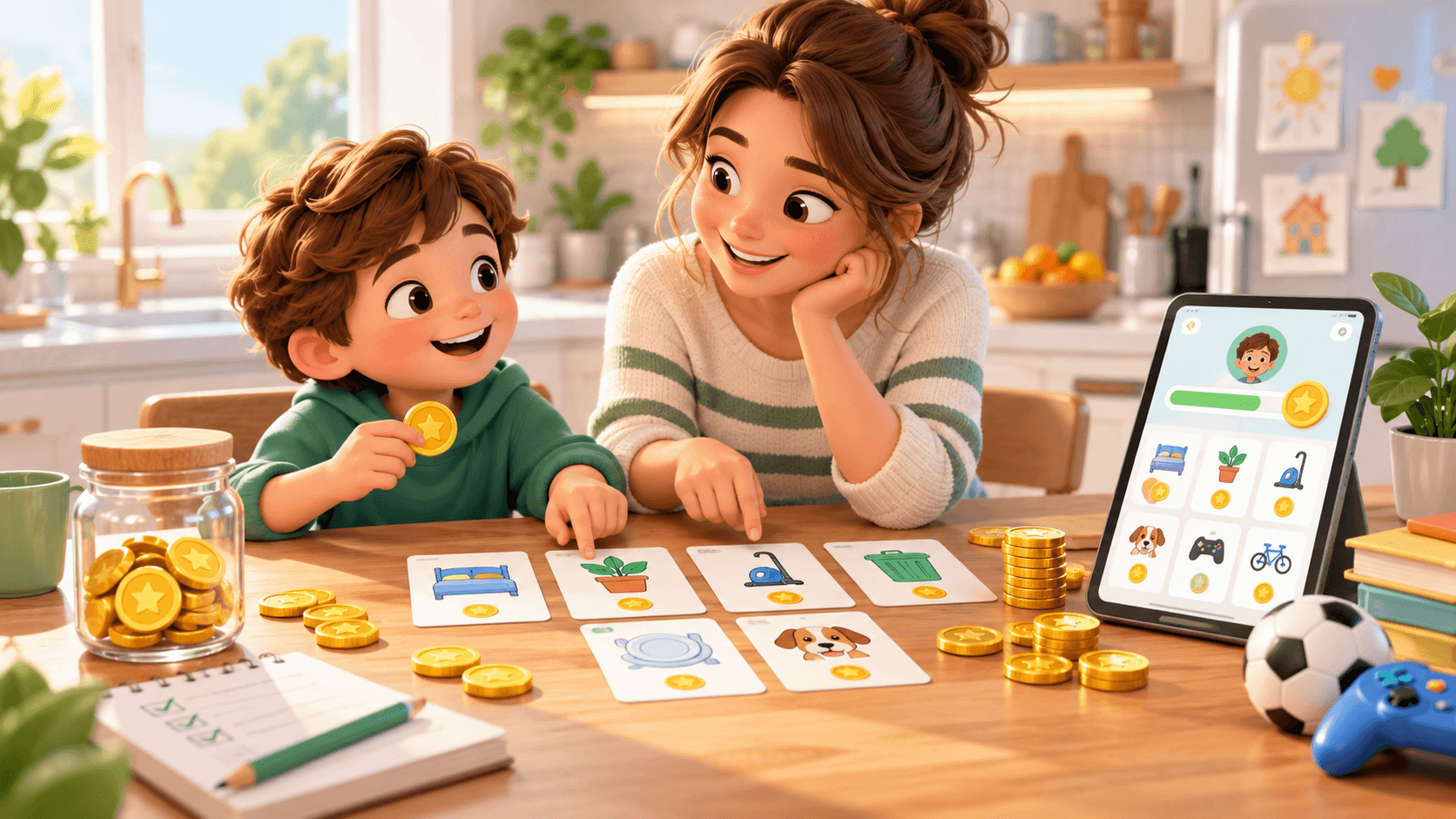
Virtual coins can help kids see progress toward a reward. They make effort visible, especially for younger children who benefit from concrete signals.
Coins should be explained clearly. In KidMint, coins are family points with no cash value inside the app. If a parent wants to connect coins to allowance, the parent handles that money outside the app.
Make approval part of the routine
A reward system is easier to trust when everyone understands the review step. Kids complete chores, parents approve the work, and coins move after approval.
If a chore is sent back, the reason should be clear enough for the child to fix it.
- Choose three to five starter chores
- Use simple coin values
- Review work before coins move
- Refresh rewards as kids get older
Adjust by age
Young kids may need small rewards and quick feedback. Older kids and teens may care more about privileges, independence, and bigger goals.
The same system can support both if chores, rewards, and expectations are matched to each child.
Questions parents ask
What are good family rewards for chores?
Good starter rewards include movie night, extra screen time, a favorite snack, choosing dinner, a later bedtime, or a parent-managed allowance reward.
Should every chore have the same coin value?
No. Coin values can reflect effort, age, and how important the chore is to the family routine.