
Preteens are developmentally ready for more complex, independent tasks. By gradually increasing responsibilities and using a consistent, parent-approved reward system, you can foster capability and confidence without daily power struggles.
The transition from early childhood to the preteen years brings a noticeable shift. Your child is more capable, more aware of their surroundings, and increasingly eager for autonomy. This is the perfect window to expand their role in the household.
Assigning chores for preteens is about teaching life skills, time management, and the value of contributing to a family team. At ages 9 to 12, children can handle multi-step tasks with minimal supervision, making this a critical stage for building independence. For the wider age map, see best chores for kids by age.
Here is a practical, step-by-step guide to structuring preteen responsibilities in a way that feels fair, manageable, and rewarding for everyone.
Bedroom and laundry responsibilities
By age 9, a child's personal space should become primarily their domain to manage. Shifting the mental load of their bedroom to them teaches ownership. These jobs are a practical starting point for chores for 9 year olds, and they still fit chores for 12 year olds who can run the routine with less help.
Daily bed-making
A simple, non-negotiable morning routine.
Floor and surface tidying
Keeping toys, books, and clothes off the floor and desk.
Laundry basics
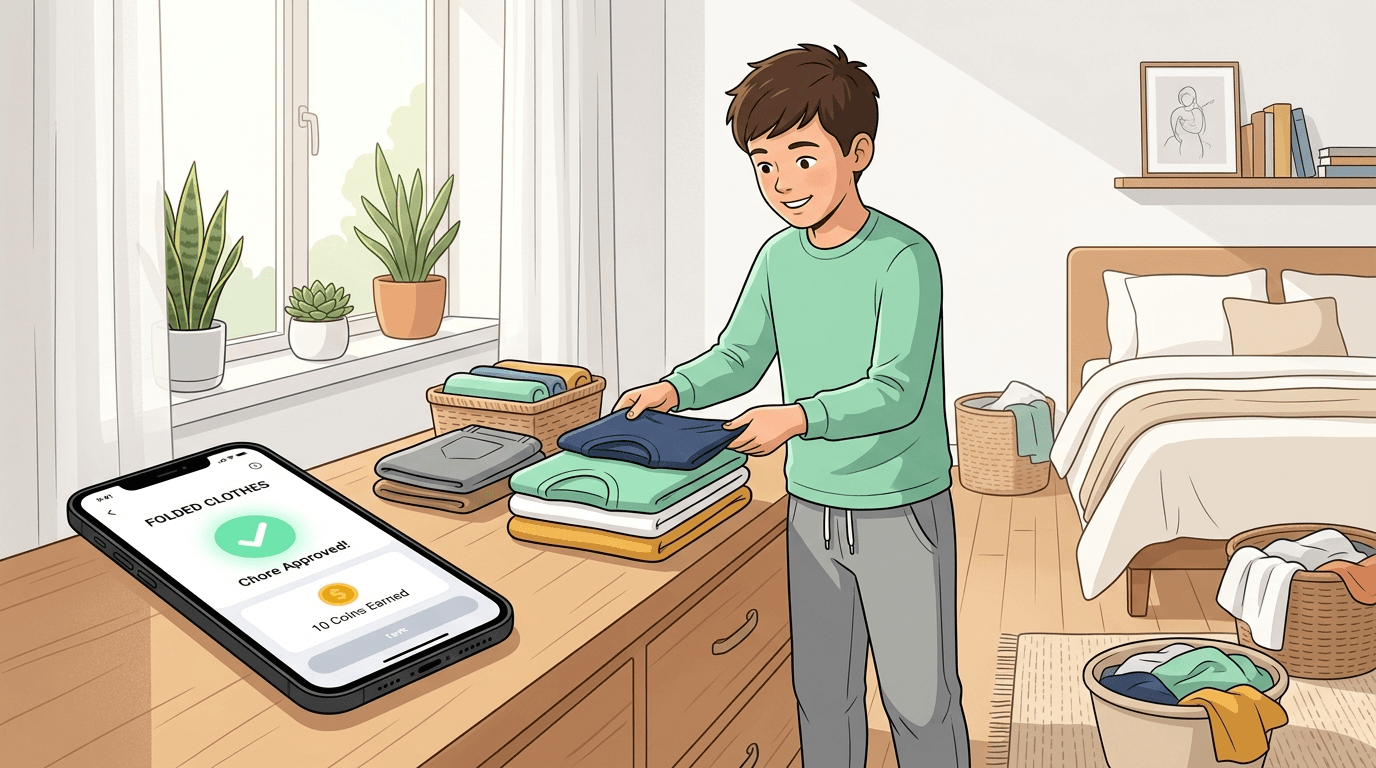
Sorting lights and darks, operating the washing machine with initial supervision, folding their own clothes, and putting them away.
Changing bed linens
A weekly or bi-weekly task that builds a sense of routine.
In the KidMint app, this age group uses the Explorer interface, designed for ages 9–13. Wording, type size, and tap targets adjust for that band so they can track these routines on their own.
Kitchen and household chores
The kitchen is a hub of daily activity and a great place for preteens to learn practical life skills. Start with safe, structured tasks and gradually introduce more complexity.
Dishwasher duty
Loading, unloading, and putting away dishes correctly.
Meal prep assistance
Washing vegetables, setting the table, or preparing simple, no-cook snacks such as sandwiches or fruit bowls.
Taking out the trash and recycling
A classic, reliable household job.
General tidying
Vacuuming common areas, dusting shelves, or wiping down kitchen counters after dinner.
Outdoor and yard chores
Outdoor tasks help preteens connect with their environment and understand that household maintenance extends beyond the front door. These are often highly visible tasks, which can provide a strong sense of accomplishment.
Yard upkeep
Raking leaves, pulling weeds, or watering garden plants.
Pet care
Feeding, watering, and walking the family dog, with neighborhood safety rules clearly established.
Vehicle care
Washing the family car or cleaning out the interior with a handheld vacuum.
Bringing in mail or groceries
A simple but helpful daily contribution.
Chores that build independence
The ultimate goal of a family chore chart is to raise capable adults. Some responsibilities are less about cleaning and more about self-management.
Packing their own school bag
Ensuring homework, sports gear, and lunch are ready the night before.
Managing a small weekly routine
Using a planner or an app to track when their chores are due without constant parental reminders.
Helping with younger siblings
Reading to a younger sibling or helping them get ready, under your general supervision.
How to increase responsibility gradually
Dumping a dozen new tasks on a 9-year-old overnight is a recipe for resistance. The key to success is gradual, supported escalation. If motivation drops, the guide on how to motivate kids to do chores covers ways to reset the routine without a daily standoff.
Start with a baseline
Pick two or three new chores to introduce this month. Master those before adding more.
Define “done” clearly
A preteen’s definition of a clean room might differ from yours. Agree on the standard upfront, such as “the floor is visible, and the bed is made.”
Use a consistent tracking system
Whether it is a whiteboard or a digital app, visibility prevents the “I forgot” or “I already did it” debates.
Require parent approval
In apps like KidMint, kids can mark a chore as done and attach an optional photo as a private review aid. Coins are added only when you approve. That keeps the standard with you and opens the door for constructive feedback.
Connect effort to meaningful rewards
Preteens are highly motivated by autonomy. Let them save virtual points for rewards they genuinely value, such as extra screen time, a later weekend bedtime, or choosing the Friday night movie.
KidMint coins are virtual family points. They are not money, a stored cash balance, or a debit card. If you choose to link chores to a real-world allowance, you can create a custom reward like “$5 Allowance” in the app, which you fulfill yourself. The virtual coins guide explains how to keep those points clear.
Ready to streamline your family routine?
You do not have to manage the mental load of chore tracking alone. KidMint is designed for families with children ages 5–18, with a calm dashboard for parents and an age-appropriate experience for kids. KidMint is available now on Google Play, and iOS is coming soon.
If you are just starting out, review the guide on chores for young kids. If your child is approaching their teen years, prepare for the next step with the guide on chores for teens.
Ready to see how it works? Set up your family in under five minutes and turn everyday tasks into a cooperative win.
Questions parents ask
How many chores should a preteen have?
A good rule of thumb is about 10 minutes of chores per week for each year of age. For a 10-year-old, that is about 100 minutes (1 hour and 40 minutes) of chores per week, broken into manageable daily or weekly tasks.
Should preteens get an allowance for chores?
Many families tie allowance to chore completion to teach the connection between work and reward. In KidMint, kids earn virtual coins for approved chores, which they can redeem for parent-defined rewards. If you wish to give real money, you can simply add a "$5 Allowance" reward in the app that you hand over in person. KidMint does not hold, move, or distribute real money.
What if my preteen refuses to do their chores?
Stay calm and avoid power struggles. Revisit the expectations together. Ensure the tasks are clear, the reward is actually motivating to them, and that you are consistently reviewing and approving their work. Sometimes, adjusting the chore or the reward is all it takes to reset the routine.