
Matching chores to a child's developmental stage sets them up for success, and pairing those tasks with a clear, parent-approved reward system makes the routine stick.
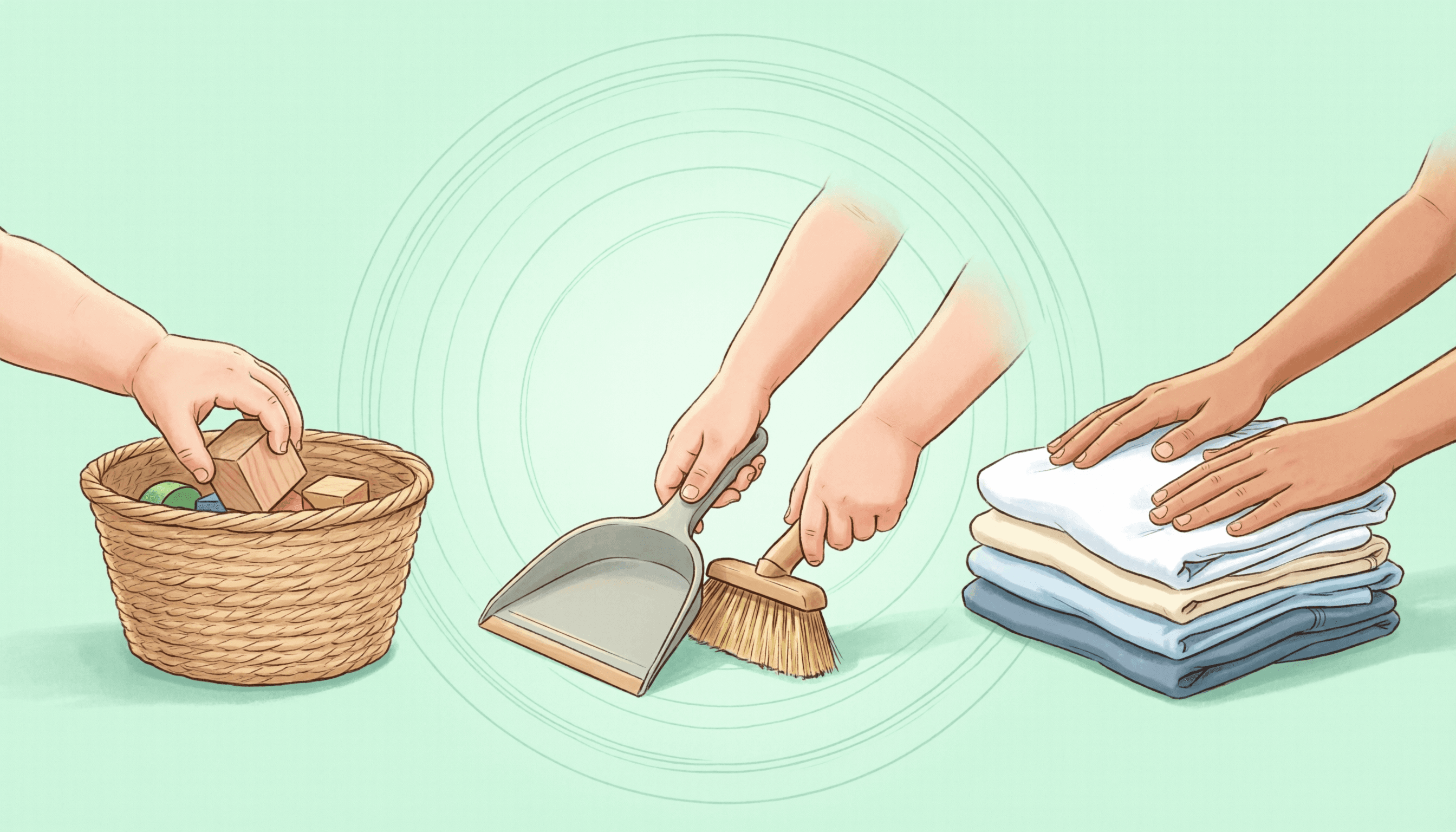
Every parent knows the feeling. You ask your child to clean their room, and they stare at the mess, unsure where to start. Or you ask them to load the dishwasher, and you end up re-doing it later because the bowls were stacked backward. The issue usually is not a lack of willingness. It is a mismatch between the task and the child's developmental stage.
Finding the best chores for kids by age is about setting them up for success. When tasks align with what a child is physically and cognitively capable of doing, the daily friction drops, and genuine life skills begin to take root.
Why age-appropriate chores matter
When chores match a child's abilities, they build confidence rather than frustration. A five-year-old cannot safely chop vegetables for dinner, but they can wash them in the sink. A teenager might resist picking up scattered toys, but they are perfectly capable of managing their own laundry.
Assigning age-appropriate chores reduces the need for constant hovering. It teaches children that maintaining a home is a shared family effort, and it gives them a tangible way to contribute.
Best chores for kids ages 3 to 5
At this age, chores are really about participating in family life. Tasks should be quick, concrete, and ideally done alongside a parent. The goal is to build the habit of helping, not to achieve a spotless house.
These chores for 5 year olds and younger helpers are a practical place to start:
- Putting dirty clothes into the hamper
- Wiping up small spills with a towel
- Putting toys back into designated bins
- Helping to feed a pet, with close supervision
- Making their bed by pulling the covers up
Chores for ages 6 to 9
Kids in this age group can handle multi-step instructions and are developing the fine motor skills needed for more detailed work. They can start doing tasks independently, though they will still need gentle reminders and check-ins.
- Making their bed completely
- Sorting laundry into lights and darks
- Emptying small trash cans around the house
- Setting and clearing the dinner table
- Sweeping the kitchen floor with a small broom
- Loading and unloading the dishwasher with non-sharp items
Chores for ages 10 to 13
At this stage, children can take ownership of specific household responsibilities. The focus shifts from helping a parent to maintaining a shared space. They can be trusted to complete a task from start to finish without direct supervision.
- Taking out the trash and recycling to the curb
- Folding and putting away their own laundry
- Cleaning the bathroom sink and mirror
- Preparing simple meals or snacks, like sandwiches or scrambled eggs
- Raking leaves or shoveling snow from a small path
- Washing the family car
Chores for teens ages 14 to 18
Teenagers are capable of doing almost any household task an adult can do. The goal here is preparation for independent living. When they eventually leave home, they will need to know how to keep their own space clean and functional.
A clear list of chores for teens can look like this:
- Doing their own laundry from start to finish, including washing, drying, and folding
- Cooking a full family dinner one night a week
- Deep cleaning appliances, like the microwave or oven
- Mowing the lawn or doing heavy yard work
- Running errands or grocery shopping if they drive or take transit
- Babysitting younger siblings for short periods
How to make the routine stick
A list of chores is only half the equation. The other half is a system that tracks the work and recognizes the effort. This is where many family routines break down. Kids forget, parents get tired of repeating themselves, and the paper chore chart for kids gathers dust on the fridge.
A practical approach is to tie completed chores to a family reward system. When kids know exactly what is expected and what they are working toward, motivation follows. If you want the day-to-day habits behind that system, start with how to motivate kids to do chores.
This is the core idea behind KidMint (available on Google Play, iOS coming soon), a family chore and rewards app designed to make this process calm and transparent. Parents assign tasks from a ready-made library or create their own, setting a virtual coin value for each job.
When a child finishes a task—especially something hard to verify, like cleaning the garage—they can snap an optional photo as proof. Parents review the photo from their own dashboard and approve the work. Coins are only awarded after parent approval, keeping the parent in control of the household economy.
Because KidMint uses virtual coins, which are private family points and not real money, a bank, or a debit card, parents can stock a digital store with rewards that actually matter in their house: extra screen time, a trip to the zoo, or a later bedtime. Kids log in with a simple family code and PIN—no email or personal accounts required for them—and request the rewards they have earned. The virtual coins guide walks through how to keep those points clear and consistent.
Tips for success at any age
Start small
Do not overhaul the whole house in one weekend. Pick one or two new chores and master them before adding more.
Be specific
“Clean your room” is vague and overwhelming. “Put your books on the shelf and put your dirty clothes in the hamper” is actionable.
Accept imperfection
A seven-year-old’s folded towels will not look like they came from a store display. Praise the effort and let the imperfection go.
Model the behavior
Let them see you doing your own household tasks without complaining.
Match the chore to the child
The best chores for kids by age are the ones a child can finish with a clear picture of “done.” Start with the stage they are in now, keep the list short, and pair it with a reward they actually want.
Ready to put the routine in one place? See how KidMint works and set up parent-approved chores and rewards for your family.
Questions parents ask
At what age should a child start doing chores?
Children can start participating in household tasks as early as age two or three with simple helper activities, like putting toys in a bin. By age five, they can take on small, consistent responsibilities.
Should I pay my kids real money for doing chores?
This is a personal family decision. Many parents prefer to separate basic household contributions from financial allowance. If you want to use a reward system without handing out cash, virtual family points allow kids to earn privileges—such as extra screen time or a special outing—without turning your chore app into a banking tool.
What do I do if my child refuses to do their chores?
Refusal often stems from the task feeling too overwhelming or vague. Break the chore down into smaller, concrete steps. If the routine still is not working, pause and evaluate if the chore is truly age-appropriate, or if the rewards they are working toward are actually motivating to them.