
Photo proof should be used selectively for tasks that are hard to verify from a distance, serving as a helpful, private review aid for parents rather than surveillance, ensuring kids earn virtual coins fairly after parent approval.
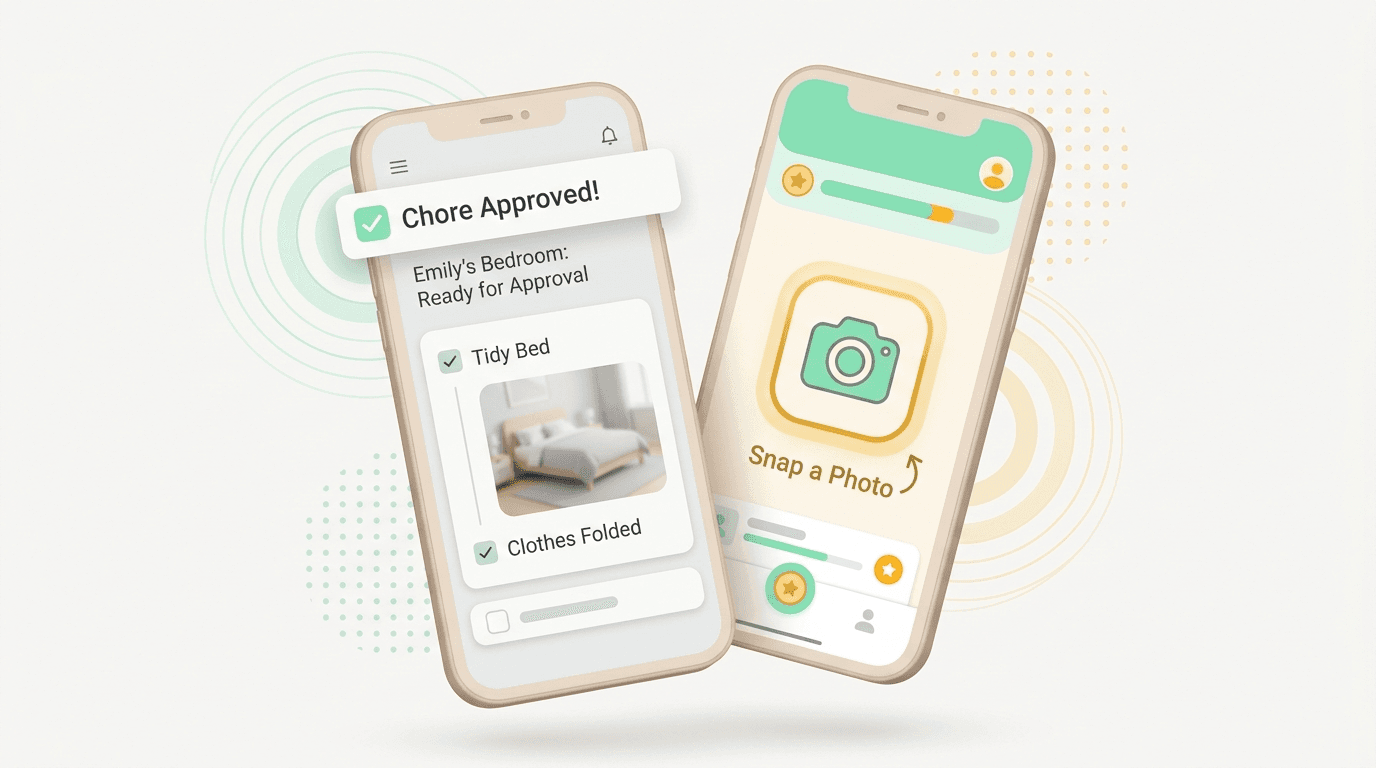
“Did you really clean your room, or did you just shove everything under the bed?”
It is a question almost every parent has asked. When managing kids chores, the gap between a child’s definition of “done” and a parent’s definition can cause daily friction. This is where a chore app with photo proof becomes a helpful bridge.
Photo verification isn’t about surveillance; it is about creating a clear, objective standard for earning rewards. When used thoughtfully, it reduces repeated reminders, provides a calm review process, and helps children take ownership of their work.
But not every task needs a picture. Here is a practical guide to help you decide which chores benefit from photo proof and how to implement them without overwhelming your family routine.
Tasks that benefit most from photo proof
The best candidates for photo verification are tasks that are out of your immediate line of sight or have specific standards that are easy to photograph.
Cleaning a bedroom
This is the classic challenge. A quick photo of the clear floor, made bed, and organized desk provides tangible evidence that the room is actually tidy, not just hastily rearranged.
Making a bed
A simple, low-effort photo that confirms the sheets are pulled up and pillows are in place. It builds a quick daily win for younger children.
Washing dishes
Whether it is loading the dishwasher correctly or hand-washing pots, a photo of the clean sink or neatly stacked dishwasher proves the job meets household standards.
Folding laundry
A picture of the neatly folded stack on the bed or dresser shows attention to detail and confirms the task is fully completed, not just transferred from the dryer to a chair.
In KidMint, you can toggle photo proof on or off for each specific chore, allowing you to customize expectations based on the task and your child’s age (from Sprout to Pro).
Tasks that do not need photos
Over-documenting can quickly make a family reward system feel like a strict audit, which can kill a child’s intrinsic motivation. Some tasks are better left to a simple verbal check or visual confirmation when you walk by.
Daily hygiene
Brushing teeth, washing hands, or taking a shower should remain private. These are habits to be encouraged, not photographed.
Simple, observable tasks
Setting the dinner table, taking out the trash, or feeding the pet are easily verified in passing. Requiring a photo for these adds unnecessary friction.
Homework or reading
While you can verify a completed worksheet, the goal is to foster a love of learning, not to turn study time into a photo submission process.
Privacy considerations for photo proof chores
When introducing photo proof chores, privacy and trust must come first. Parents rightly want to know how their children’s data is handled.
In a well-designed parent approval chore app, photo proofs are strictly a private review aid. They are not posted to a public feed, shared with other families, or used for advertising. In KidMint, children join using a secure family code and a 4-digit PIN—no personal email or Google account is required for them.
Furthermore, privacy is built into the lifecycle of the data: if you choose to delete your family account, all associated chore proof photos are permanently deleted with it.
Why photo proof should support, not replace, parent judgment
The ultimate goal of any chore chart system is to teach responsibility, not to achieve robotic perfection. Photo proof is a tool to support your judgment, not replace it.
When a child submits a photo, you still hold the final say. In KidMint, virtual coins land only after a parent reviews the submission and explicitly approves it. If a bed is made but the pillows are missing, you can gently send the chore back with a supportive note (e.g., “Great start! Don’t forget the pillows.”).
This workflow teaches children that quality matters and that their efforts are seen and evaluated by a caring adult, not an automated algorithm. It also reinforces a crucial fact: KidMint coins are virtual family points. They are not real money, a bank balance, or a debit card. They are a gamified way to track progress toward rewards you define, like extra screen time, a family movie night, or a small allowance you hand over directly.
Ready to streamline your family routine?
Finding the right balance of accountability and trust takes practice, but the right tools make it effortless. If you are looking for a calm, practical way to manage household tasks, explore our guide on choosing the right chore app for kids or dive deeper into our best practices for photo proof chores.
KidMint is available now on Google Play, with iOS coming soon. Download KidMint today to set up your family in under five minutes and turn everyday chores into rewards your kids will actually want to earn.
Questions parents ask
Are photo proofs mandatory for every chore?
No. Photo proof is entirely optional and can be toggled on or off for each individual chore. We recommend starting with just one or two tasks to avoid overwhelming your child.
Who can see the photos my child submits?
Only you, the parent or guardian. Photos are stored securely as a private review aid for your household. They are never shared publicly, used for advertising, or visible to other families.
What happens if my child forgets to take a picture?
You can simply send the chore submission back through the app with a gentle reminder note. The child can then take the photo and resubmit. Coins are only awarded after you approve the final submission.
Are the photos deleted if we stop using the app?
Yes. If you choose to delete your family account, all associated proof photos and family data are permanently removed from our servers.